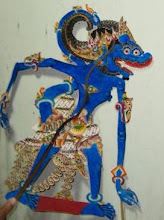
Wednesday, September 26, 2012

A telegraphic wrap-up for August and, well, most of Semptember


I’m experiencing one of those too-busy-to-even-update-my-blog phases – so much for the regular monthly wrap-up posts! I’m still having a gaming life, though. Thus I’m going to concisely, telegraphically go through the last games I played, as a place-holder and summary, while fully intentioned to write in-depth reports of the most interesting ones sometime in the near future. In case you’re interested in hearing about something in particular, ask: I’ll try to oblige requests as soon as possible before writing about any other games.

— § —

As I mentioned already, early in August I was able to play a full game of Swords Without Masters – City of Fire and Coin. It was a three-players game (as opposed to the recommended four) played over two sessions in a private house, and I’m much obliged to Epidiah “Eppy” Ravachol for providing me with the necessary rule variants in the first place. In fact, I should probably be writing an AP report for Eppy’s benefit right now, as long as I can remember a thing, rather than be blogging like this. Let’s just say that I’m going to grab the finished book as fast as I can as soon as it’s out, but also that one of the reasons I want the book so badly is that I’m looking for those game-teaching methods other than City of Fire and Coin it’s supposed to include.

— § —

Other August games included a single playtesting/playstorming session for I reietti di Eden (which confirmed it can’t currently be played as a single-session game), a short but juicy game of Ben Lehman’s The Drifter’s Escape (boasting an unusual combination of features: it was both a demonstration of a sort, to a new player with very little previous role-playing experience, and a sequel from an old game with a much-beloved main character), and, unusually, just a few scenes of two-players Remember Tomorrow (to finish off an episode).

— § —

On September 1st and 2nd I attended GnoccoCon in Reggio Emilia. It was as good a convention as always, a few minor quibbles with food logistics nonwithstanding: the record attendance this installment achieved (75 people or more!) obviously taxed the existing structures and routines past their limit, but hopefully the organizers are going to pay this a thought and bring a measure of change to next year’s edition (which I’m anticipating already).
I ran a game of Meguey Baker’s Psi*Run (which proved very convention-friendly, as expected), a round of Ben Lehman’s Clover (as cute as expected, more bittersweet than expected) and the one-full-length-timeslot Fables of Camelot mini-campaign I was hoping for (though we didn’t actually make it to endgame in time), plus I was finally able to try out Daniel Solis’s Dō: Pilgrims of the Flying Temple (lots of potential). It was a good two days indeed.

— § —

There was, then, a bit of a role-playing hiatus. But last weekend me and Barbara got back to Remember Tomorrow again to start a new episode, which already expanded our fictional world with some totally unexpected content while reincorporating favorite characters of old.

Tuesday, August 14, 2012

Monthly Wrap-up: a report of July 2012 EtrusCon

-->
Last month, as my gaming staple most of the time, I kept playing two-players, long-form Remember Tomorrow in weird places, outdoors and while traveling. Then, on the last weekend of July, I went to EtrusCon. Sooner or later I’m going to write in detail about Remember Tomorrow and the pros and cons of playing it the way we’re playing it – this time, however, I’m going to concern myself with writing a convention report instead.

§

I held very high expectations for this summer-edition EtrusCon, both because last year’s summer edition had been capital-A-awesome and because the winter edition was instead considerably underwhelming. What I got was in fact a mixed bag, partly because of a decline in attendance (compared to last summer).
Since EtrusCon is a classic hotel-convention with a very hands-off organization paradigm (what the one organizer, Simone, actually does is just to negotiate a discount hotel rate and reserve rooms for attendees, and that’s it), the obvious upside to it is a no-time-wasted, play-all-the-time attitude, the implied downside being that you need to set yourself up for it beforehand, though, because there is little support provided for organizing tables on the fly (no “front desk”, no call-to-arms, not even a local, off-line master copy of the schedule). I was only half-successful with organizing myself in advance, though, part because of untimeliness and/or risk-taking on my part (reserving a less-than-ideal timeslot for a given game in order to be able to play with a given person, say, plus experimenting with multiple shorter games per time-slot, being late in the morning as is usual for me, etc.) and part because of some players being delayed by traffic, or tired early in the evening, etc. – this resulting in some waste of time re-organizing tables and, ultimately, a high percentage of aborted games. It’s good to hear that this was just my own subjective blight, though (contrary to the last winter edition, when exceedingly low attendance made this the general norm), while the general ratio of finished games people had at the convention was high.
An additional drawback of a hotel-convention is, in the event of lower-than-ideal attendance (i.e. the hotel being not sold-out), having to share spaces with other random people. And, well, the EtrusCon hotel, as it happens, is large enough that it would take 100+ stay-in attendees to sell it out, making this a near-impossible proposition for the time being: AFAIK, the largest attendancies to hotel-based role-playing conventions in Italy were recorded by last year’s summer EtrusCon and some editions of InterNosCon, and barely exceeded 50 people.
But enough with the organizer-oriented gibberish! Let’s talk about the games I played, instead. Asterisks mark games I scheduled and ran/facilitated myself. I was also supposed to run a game of MegueyBaker’s Psi*Run, but we had to cancel it because of half the interested players not making it to the hotel in time.

Fables of Camelot* — this is a little, surprisingly well-crafted game by Sami Koponen with Eero Tuovinen, whose existence I discovered by sheer happenstance as Eero ran it for me and a random bunch of Solmukohta-goers in Helsinki, a few months ago. It’s touted as an introductory role-playing game, good for a convention environment and also suitable for children – and it’s exactly because I plan on using it with children that I decided to train myself in running it. Thus I took it to EtrusCon as a perennial, persistent and weekend-spanning, multi-installment off-slot filler game that multiple groups of players could dip into for a round or more.
While I didn’t get to play all the way to the fall of Camelot (the system-mandated ending), it was good enough to play three full quests, with parties ranging in size from six down to three knights. I think I learned a lot about Fables of Camelot in the process. Fully confirmed were all of its immediately apparent pros: explaining the rules is indeed effortless and takes very little time, heraldic animals are a greatly effective characterization device, drawing one’s own coat of arms is great fun, consequential decisions with no predetermined good or bad choice (think Dogs in the Vineyard) are both an absolute focus of the game and a transparent process (in that you don’t usually have to point them out, out-of-character), dice-rolls are both infrequent and tense (and they take very little time to execute, while channeling a great deal of attention). I think I learned how to plan “adventures” and frame scenes appropriately, and I’m pretty sure by now that should one have access to the full text, with its long lists of example quests and travel-scenes to pick from, then running the game would be truly effortless – unfortunately, the book’s only available in Finnish.
What I didn’t expect, though, was that the game could grow to such a quiet solemnity as we experienced in the Grail quest: I’m deeply impressed. Sure, should I look for a shortcoming to point out, this is not a game of very nuanced and complex characters – but is its reference literature? It’s all about broad strokes and large-picture plots, and emerging commentary which satisfies from a metaplay vantage point, not about the psychological finesse of fictional characters in the resulting fiction. Now I’m thinking I’ll reserve a full time-slot for Fables of Camelot at some upcoming convention, possibly GnoccoCon, to play all the way to the endgame: it should be feasible enough a feat.

SeaDracula — it’s really odd how I’ve been having the handbook for this game in my possession since it still sported a (1$) price-tag, but had never tried it out before! I remember thinking, at the time, that something about the text didn’t “click” for me and I’d rather look up somebody who could teach me how to play by example. Well, how changed I am since then, for now the text speaks so clearly to me! Know that the game was great fun, ran shorter than I expected it to (which is a plus!) and is totally appropriate for parties – almost a party-game, yeah, though maybe a tad too complex in the setup for a “casual gamer” audience. I’m gonna play this again, soon and often. ♥

Tactical Ops (playtest) — having left one time-slot open in my schedule, I found myself with a random party of six people (my old friend Alfredo being in the mix), among them my friend Patrick who rather enthusiastically pitched a playtest session of Tactical Ops, a design-in-progress by Alessandro “Hasimir” Piroddi (who wasn’t there). While I wasn’t particularly grabbed by the premise of the game, some were, and being a curious fellow I tagged along. Small-squad tactics for dangerous missions is, if we read it to mean military/commando operations, the single most overdone thing in the history of role-playing games (I’m of course conflating most flavors of D&D into this) – but, on the other hand, I thought the description could also apply to caper/heist movies (a vague itch I still have to scratch). In fact, the playtest document Patrick had with him came (as far and I can tell) with absolutely no example situation, mission or backdrop included besides the core premise. We soon enough agreed on a twenty-minutes-into-the-future prison break scenario, then proceeded to create our characters: a much lengthier process than was immediately apparent by glancing at the character sheets. I didn’t keep track of the time, really, but I figure we spent a minimum of two hours doing pre-play setup.
So, here’s my shout out to Alessandro, the designer: while not a faulty design choice per se (one can sure invest a much longer time preparing for a multi-session campaign), such a long setup process is unacceptable in a convention environment! If you want to have your game playtested at public events (or, well, out-of-house playtested at all, I might add), may I suggest you release a fast-play package, consisting of one or more example missions with pre-made characters? If I were you, I’d make it my first priority at the moment.
During the prep phase, our motley group seemed to easily agree on things – everybody generally cheered at ideas being thrown around, making the brainstorming/pitch a breeze. But! I think the character creation process – with its attributes and skill groups and skills and specialties to rate, plus advantages and motivational links to “buy” – looked deceptively familiar to all of us, which either got us to pay attention to the wrong things or to not pay attention at all. We should have been paying attention to what each other player was picking out of the available choices! In hindsight, that’s pretty obvious, but in the heat of the moment we just self-tagged with role-definitions (“hacker”, “doctor”, “gearhead”, “muscles”, “face”, “infiltrator”) and hurried up to each fill up one’s own character sheet, in isolation. Had I payed attention, I would have noticed that the “infiltrator” was duplicating part of the “face”-guy’s and (IIRC) “muscles”-guy’s skillsets, not maxing up the athletics/movement skills I incorrectly assumed he were (a skillset nobody focused on at all); that while I was hyper-specializing my hacker guy to be exactly that, some others were spreading their skillpoints wider, for example to be ready for violence in case of a major shit-up; that the “gearhead” was a specialist in jury-rigging veichles which no character was good at operating anyway, and so on. It is thus my humble opinion that as a “team” we were already fucked, whatever the mission. Not that we were going to find out, anyway…
Having gone through all of the preparations, and of course some more necessary rules-briefing as well, we went then into the first actual scene of the game knowing we weren’t going to play the mission to its end anyway, because of our real-life time constraints. This being not what we had been assuming initially (before prep) I daresay we were now in maybe the worst possible collective mood for role-playing: the noncommittal, half-assed one. And that’s when our group’s collective ability to agree on things – this basic foundation of role-playing – began to falter. Having framed a first scene, we started dabbling in the game’s central authority/credibility system of stating “facts”, but I don’t believe we had fully understood it, let alone grasped its subtleties, as we launched into a conflict. Of the conflict, we played a single round at most, struggling with the fact that – in our lack of experience with the system – we had not properly set the parameters of it to match the developing fiction, nor had we picked mechanical categories for our actions that significantly reflected our combinations of fictional intents while giving us a chance to hit the difficulty treshold, no. Very quickly, our game devolved into a debriefing session of the sort which consists in micro-analyzing small bits of the game without having seen the full picture – which was absolutely pointless, the designer not being there and nobody being apparently committed to write a playtest report.
To those who asked my opinion on Tactical Ops as a design, the only honest anwer I could give was: I’ve seen too little of it to form any opinion whatsoever, sorry.

The City of Fire and Coin (Swords Without Master)* — here’s another game which went quite poorly, but not for any defect of design. I had assembled a team of people I love and I know are in love with the (pulp/fantasy) genre – Ariele, Lapo & Tazio – and they took to the game with all of the glee I expected; still, everybody was apparently exhausted by the too much play they’d already had (or maybe with too much food and drink?) and soon my friends’ focus waned. Thus to my great displeasure we had to call it quits, having only played out the first Perilous Phase.
This was to be considered a playtest, not of the game-design, but of the technique of exposition (the way of “teaching” the game) embodied in The City of Fire and Coin, a learn-while-you-play tutorial written in a hybrid rulebook/gamebook style somewhat comparable to the “red box” Basic D&D set of the Eighties. While appearing well-devised on first sight, such tutorial proved way too verbose to read – and translate to Italian on the fly – while playing: sitting through the long passages of read-aloud instructions encouraged Rogue players, as a reaction, to hog the spotlight longer and go for longer talking times in the first Perilous Phase, which proved to be an interest-killer in the end, as the scene (as framed by a read-aloud box in the text itself) consisted of a street brawl with little context or emotional attachment to it. I suspect, despite an apparent interest the players showed in depicting action stunts, that had they made short work of that first Storm instead we would therefore have retained interest in the game well into the following phases.
All things considered, I walked away with a strong commitment to try again as soon as possible – which in fact happened already as of the time I’m writing this report! I won’t discuss my second game here, though, as it will become material for a follow-up post.

Ganakagok* — I’ve been in love with Ganakagok at least since the one full game of it I had a couple years ago. I’m well aware of the polemics surrounding the game’s subject-matter (Bill White was exeedingly naïve in his exotical treatment of elements from living cultures, and consequent blatant misuse of the word “Inuit”, which is something he himself later acknowledged) and my own ambivalence about the affair means I’ve had to develop my own language for explaining the game’s world as fantasy and only referencing real-world cultures in what I’m convinced (as a culture historian) to be a completely respectful way – but that’s part and parcel of dealing with fantasy fiction as a genre, anyway, and come on: instances of fantasy fiction which break out of too oft-repeated, paradigmatic, stupid molds are as needed and welcome as they can be (in gaming especially)! My love of Ganakagok, anyway, is first and foremost a love of its mechanics: suggestive card-reading coupled with some moderately complex resource management (and resource-tracking, which makes actions full of consequences, some of them unintended): it is by far the one title which had greater influence on my own design-in-progress, I reietti di Eden.
The game I ran at EtrusCon wasn’t stellar, maybe, but I felt it was good enough. We couldn’t play it to a proper ending, sadly, but we were so close. I was, in fact, disappointed to learn that what had been a half-full glass to me was instead a half-empty one to my fellow players (my dear Barbara and Daniele Lostia of Piombo fame). I’m not sure, of course, whether it is at all possible, or recommended, to play a game of Ganakagok with only two non-GM players present: maybe we had set ourselves up for a failure since the very onset?
One critique from Daniele which I think is especially poignant is that we had prepped so many elements in the immediate pre-game setup (world/village creation) which didn’t actually get reincorporated. In the moment I couldn’t but agree, but now, with a clearer head, I see the glass as half-full again: sure, we had more prepped elements available than we actually needed to use, as a side-effect of prep being a very organic process, but we did use some of those elements, and built and expanded on the ones we picked (also an organic process, as we focused on the ones we most needed in the moment), which obviously constrained and strongly directed our play – while on the other hand all those unused elements, while never incorporated in the actual scenes, still existed as a backdrop which informed play, and we never forgot nor invalidated them. Prep, in other words, always informs play, even when pieces of prepped content don’t actively come out during it.
On an unrelated note: next time I play Ganakagok, I’m considering dropping the Body/Face/Mind/Soul section of the character sheets entirely, using instead a fixed value of “3” in lieu of those scores for all purposes. Besides scores of “2” being a bit too punishing to be fun, my point is that your average player-character is only expected to be in the spotlight once or twice. Having four different “arenas of conflict” with different (and hugely important) ratings attached, then, needlessly punishes a player for open-mindedness, as the obvious optimal strategy would be to set one of your arenas at “4” and maneveur so that your own spotlight scene(s) focus on that: a boring exercise in predictability, rather than in storytelling. Gifts and Burdens should fully suffice to make characters distinct in competence, instead, especially as character Identity is also a trait with mechanical usefulness attached.

Overall, EtrusCon was an extremely diversity-rich environment, with happy and satisfied people enthusiastically playing things as diverse as OD&D/Lamentations of the Flame Princess and abstract board-games, Joe Mcdaldno’s Monsterhearts (which is an Apocalypse World-based rpg about the coming of age of metaphorically-monstrous teenagers) and Paolo Guccione’s homebrew game of tabletop battles between Go Nagai’s giant robots which is an adaptation of old Chaosium Basic Role-Playing (!). Tazio Bettin, Iacopo Frigerio, Davide Losito, Matteo Turini, Marco Valtriani all ran playtest sessions of their own designs besides the numerous foreign games played.
Some games, of course, struck me as more interesting than others; some I heartfeltly avoided, and when invited to play I declined. In the light of which, I can’t help but turn and look back over my own shoulder, realizing that an 18-years-old me – for example – would have merrily sat down at the BRP Mecha table (calling dibs on Getter Robot, probably) while not even paying a thought to the Lamentations table which these days, instead, I was very much tempted to join. And the reasons I didn’t choose to play LotFP in the end, those are the complete opposite of why I wouldn’t have joined an OD&D table if you asked me when I was, say, 25. All of the above is part due to how changed the landscape of role-playing is since previous times, sure, and part because of how changed I am myself.
Thus, the single most important thing I got from EtrusCon is not merely an appreciation of diversity within a small but fluid scene: it’s an enhanced understanding of my own tastes concerning role-playing games – of what I like and dislike and what I really look for and what I’m actually in it for – and of how mutable those preferences are.

Wednesday, July 25, 2012

La bevanda delle sere d'estate

In un bicchiere da 0,5 l (per esempio un bicchiere da pinta di birra o da media) versare nell'ordine:
  • ghiaccio a piacere (facoltativo),
  • un dito di maraschino,
  • da 25 a 33 cl di chinotto,
  • il succo di mezzo limone.
Mescolare brevemente con un cucchiaino lungo. Sorseggiare davanti al proprio PC.

Thursday, July 19, 2012

Ability scores: roll #d6, some of them in order


That which follows is a method of Ability scores determination for use – during character creation – with any role-playing game employing six Abilities with scores in the 3-18 range. This includes all iterations of D&D I know about, retro-clones or other immediate derivatives of them, as well as Dungeon World and some others. The method can also be altered for a different number of Abilities or scores in a different range, of course.
My aim with this is to marry the “organic” feel of the roll-3d6-in-order method with some of the most desirable qualities of roll-and-arrange and fixed-set methods (namely, the ability to play the class you desire, to always have a character you can make sense of in your mind’s eye, and less power-disparity within the party).

Rafu’s matrix method

First you need to draw a grid of three columns by six rows. Outside the grid scribble the Abilities used in your game, one per row. It looks like this:

Str:


Int:


Wis:


Con:


Dex:


Cha:


STEP 1: roll 6d6. Write the results in the first column, arranging them as you wish.

STEP 2: in the second column, write the numbers 1, 2, 3, 4, 5 and 6, arranged as you wish.

STEP 3: for the third column, roll 1d6 per row and write down the results in order.

Finally, total up each row to get your Ability scores.

Example: I'm playing OD&D. I roll underwhelming dice in Step #1 (4, 4, 3, 2, 2, 1), but I decide I'm gonna try and make this character a Cleric — a hardy and survivable, no-nonsense knight-templar type. Dice are kinder to me in Step #3.
Str:
3
4
5
 =12
Int:
2
1
2
 = 5
Wis:
4
6
4
 =14
Con:
4
5
4
 =13
Dex:
1
2
3
 = 6
Cha:
2
3
6
 =11

Variants

  • If you like to use formal rules for “unplayable” characters, to establish when a player’s allowed to reroll, try devising some based on Step #1 (only): this saves everybody’s time. Something like: “if you got two or more 1s and/or your best die is a 4, you’re allowed to reroll”.
  • If you want a more uniform power-level, and/or to make any one point of difference very meaningful (a flatter distribution):
    • for Step #1, roll 8d6 then drop highest and lowest die (or even 10d6 drop 2 highest and 2 lowest, etc.);
    • for Step #3, roll 3d6 and keep the median value (drop high and low) instead of 1d6.
  • For a different number of Abilities (five scores, seven scores, etc.) you need to both:
    • roll nd6 in Step #1 where n is the number of Abilities;
    • alter the array of numbers in Step #2 by removing or adding (duplicating) values starting from the middle ones (3s and 4s): thus an array for an 8-Abilites game could be “1,2,3,3,4,4,5,6”, one for a 4-Abilities game is “1,2,5,6”.
  • To generate Ability scores in a 2-12 range (Epées & Sorcellerie, World of Dungeons):
    • skip Step #1;
    • for Step #3, either:
      • use the 3d6-keep-median roll, or
      • repeat Step #3 twice, writing down both sets of results, then choose one (a whole set, not row-by-row).

Notes

I originally devised this method back in my 3E days, out of a desire to introduce some controlled randomness, but never got to put it to any real use. I wouldn’t use it for a 4E game, because it doesn’t fit with the small-squad tactics optimization those rules finally canonized as the “official” style of play, IMO. But in the present era of Old-School Renaissance, widely available OD&D retro-clones and free-licensed, D&D-themed Apocalypse World hacks… I believe there is now room and even demand for little house-rules like this to be circulated.

Monday, July 2, 2012

Monthly wrap-up: not much to see here

June was my slowest month, game-wise, since a very long time. No big surprise: I was hugely busy doing other things. Since that On Mighty Thews game I already wrote about, I've only been playing a pithy few scenes of Remember Tomorrow. Tune in again in a month for something more substantial.

Sunday, July 1, 2012

"Dungeon World", my own way

So, Dungeon World is, basically, using the rules from Apocalypse World to recreate the world of Dungeons & Dragons, right? Then, if I designed Dungeon World, here's what the playbooks would be:
  • The Adventurer — you go dungeon-delving for fame and fortune; the exact way you kill monsters (sword-fighting, spell-casting, arrow-shooting, god-invoking, back-stabbing, shape-shifting, kung-fu, etc.) depends on the options you take from the playbook.
  • The First-leveler — you're young and eager and you wish you were as cool as the Adventurer: survive long enough and that may happen.
  • The Leader — of an adventuring party (a small, but very powerful, gang).
  • The Henchman (not gender-exclusive: you can be a henchwoman, henchqueerperson, etc.) — you earn your living by being around adventurers a lot.
  • The Mayor — could be a council leader, town elder or whatever, and they're sort of like the Hardholder, in that they're responsible for a town and her citizens, probably with a militia to wield for that purpose.
  • The Baron — you control land and a manor, possibly an actual castle, and lead an armed gang of violent people; also Hardholder-ish, but compared with the Mayor you've got different responsibilities and loyalties.
  • The Merchant — a barkeeper, innkeeper or shopkeeper, possibly a craftsman like a weaponsmith, you've got an establishment sort of like a Maestro'D's.
  • The Thief — comes with a guild, but with no warrant that the guild is their friend.
  • The Wizard — not your average adventuring wizard (we've got that covered already), but the kind of wizard who owns a wizard's tower; optionally, your tower may include a dungeon.
  • The Sellsword — you fight for coin and kill for a living; maybe you've got your own mercenary gang of which you're the captain, or maybe you're a solitary assassin from some dark cult.
And here's a basic move:
When you go adventuring in a dungeon with your brave fellows, roll +a currently highlighted stat. On a 10+ choose 3, on a 7-9 choose 2:
  • you are not wounded
  • you didn't use up rare or valuable provisions (such as magic item charges, a potion…)
  • you didn't give your adventuring fellows +1Hx with you
  • you got a rich loot
  • you got an even richer loot
  • you gained a useful magic item
  • you gained a powerful magic item
  • you gained a permanent magic item
  • bards are singing of your deeds
On a failure, you are stymied during your adventure, and the MC will zoom in to that situation, showing you being cornered, embattled, imprisoned, hunted, perplexed by a puzzle, or worse.

— § —

Now, the serious part. Please, don't think that the point of the above is to slander the real DW for not focusing on the aspects of D&D (or AW) that I right in this moment I'm thinking are more funny. Rather, I meant to illustrate a point I recently made on Lumpley's blog concerning player-vs-player conflicts in AW. Well, or maybe the joke pulled my leg and it became an end in itself.

Monday, June 11, 2012

Monthly wrap-up for May

I’m being sort-of-busy, but I want to keep posting monthly updates about my role-playing experiences. Here you are, then: May 2012.

Long live the Kingdom

My biggest thing last month, in terms of effort and learning, was playtesting Kingdom, an interesting game in development by Ben Robbins (of Microscope fame). I played two one-shot, three-people sessions, one with Barbara and Alessio and the other with Barbara and Simone. I don’t really feel like describing the game at length, in the current stage, but I do recommend you join in for the next round of playtesting – whenever it might be – if you’re even remotely interested in politics as a topic for role-playing games. It’s a clever, novel design, using only the most basic of tried-and-tested building blocks, never trying to fit its in little-explored subject-matter through ill-fitting holes shaped like familiar techniques but rather carefully thinking its approach from the ground up. Reading the text got me pretty excited. In pratice, it didn’t play as smooth as I hoped it would: some subsystems are prone to cause stumbling or player fatigue, but those have been clearly identified are being redesigned – thus, my expectations for this game are very high.
As for the fictional milieu of our playtest sessions, for some reason we went twice for XIX Century settings: Carbonari in the 1820s and then railroad construction in the Wild West. While the Italian setting was the most intriguing one at first, I noticed that the western one made for more successful play, probably because we were significantly less concerned with historical accuracy, while having a huge background of previous fiction to work from (vis-a-vis a seriously underrepresented subject). I don’t think the issue is related to any particular feature of Kingdom, in other words: it would have been the same with almost any role-playing game.
A personal-level consequence of playtesting Kingdom, and then discussing aspects of it with Barbara, were some important realizations about the rules and practices of scene-framing, its toll on players and its relationship with protagonism and antagonism: I feel like I’m now getting to properly articulate some very fundamental issues I’ve been struggling with in play and tackling, somewhat unconsciously, with design (the newest and yet unreleased draft of Eden especially).

Big in the Alps

Last month as well wasn’t without a gaming convention. I was at GiocaTrento (in Trento, duh!) where – with Patrick, Erik and Jessica – I was basically in charge of the “indie RPGs” corner. I got there with a huge bag full of rpg books, which I pooled with the ones my local friends brought so that we were able to set up a table covered in indie-game-stuff: alluring covers, rough and curiosity- arousing home-bound booklets, assorted items (including a sheathed dagger for playing Mist-Robed Gate). The purpose being, of course, to make our games visible (despite the games themselves being actually intangible) and to have people ask us about them. Turns out we had it easy…
On Saturday afternoon, a chap named Alan, with whom I’d played a game of Fiasco at another meet-up months ago, voiced such an enthusiastic excitement about that game that in a second he gathered three more friends and we played 5-players Fiasco. It was a good Fiasco session, to boot! Somehow we ended up playing the wedding playset from the The Fiasco Companion using the standard Tilt and Aftermath tables (as opposed to the “soft” tables from that same book) and we got some pretty good, if crazily over-the-top, dark comedy out of it – with a healthy amount of sexy to boot. Good thing we were playing outdoors, or we’d have laughed the convention hall down! Thanks Arte, Riccardo, Vincenzo and of course Alan – I hope I got all of your names right.
On Sunday afternoon, Gaia, a girl from the convention crew, came to me holding my own It’s Complicated booklet and demanded we play that game – on the reception desk with another crew-member friend of hers, since they were both on duty. She wouldn’t take no for an answer. By pitching it to some more friends old and new, we assembled a huge seven people party to play the game. Thanks Gaia, Francesca, Gabriele the Incompetent Diplomat, Jackvice & his lovely lady and – what was your name, cute Polish girl? Seven-players It’s Complicated, yes. It would have worked, even, if not for the large number of interruptions due to, you know, playing this game at the reception table (in the end, we had to give up and cut the game short, sadly). We aimed for surreal situation-comedy, got some really crazy, cheesy over-the-top surreal comedy, and it wasn’t half bad. The bottom line, though, is that It’s Complicated really is a difficult game, in terms of – as my friend Carlo Rebagliati would probably say it – “keeping the fiction together” (la tenuta della storia, is something he’s always talking about), and that I’m now aching for a chance to play a really low-key game of it at last, with everybody really focused on exploring plausible human relationships and avoiding blatant absurdities. It will probably have to be a 3 or 4-players game (like my most successful ones to date actually have been).
In the mornings and the evenings (thanks to Patrick & Jessica, who hosted the night games at their place) I had the chance to try out a few new games myself. Boardgames aside (not usually my thing, but the ones we picked were “light” enough for me to enjoy and I had a good time), I played Vincent Baker’s Murderous Ghosts (in both roles) and Ben Robbins’s Microscope – two rpgs I had only heard about, and are now on my “must buy the books ASAP” list. I especially liked the potential for quick and fast play (though Microscope could also go on indefinitely if desired, of course).
Big heartfelt thanks go to Erik and his family, who hosted me.

A desert death-god was slain on the road to the City of Salt

This should be filed under June, actually, but what the fuck. I kicked off the month by playing Simon Carryer’s On Mighty Thews. My friend Tazio having had a sudden resurgence of excitation about that game, I offered to host a session, and was elected “GM” as a default; our friend Mario joined us in the game (and Paolo aka “Serenello” wished he could, but larger and meaner happenstances held him back).
Now, I’ve been playtesting – or, rather, successfully playing – On Mighty Thews since its first public alpha draft years ago, trying all iterations of it since then (I am, in other words, an OMT grognard who frequently confuses current rules with the ones from previous editions), and I still learn fine lessons from it. Or at least about it. I had, for example, the confirmation that three (GM +2 PCs) is the best number of players for this game – I’m now wary to ever do a foursome again, and curious to try a 1-vs-1 for a change.
The newest addition, I believe, to OMT are the Lore Roll rules. Man! In this run (the best one I’ve had using the “final” OMT rules) we really played the hell out of those, and did they pay off! By this, I don’t mean we overused them, either: au contraire, we learned that it’s moderation which brings the highest payouts – picking your Lore Roll targets carefully and sparingly, focusing on those things which really captivate you, maybe 1-2 per scene. Kudos to Mario for, basically, pacing Lore Rolls, and also for volunteering to take notes: he really showed me how Lore is OMT’s killer app! Tazio, otoh, very effectively used one such roll to make the adventure relevant to his own character, and not in the most obvious way. Good stuff.
Another relatively new addition (dating back, I think, to the last pre-final draft maybe?) is the use of a collectively drawn map. I love it because it’s fun on its own merit and it also ties in nicely with the Lore, providing a backdrop against which to hang those tidbits of information, acting as a springboard for ideas or, in retrospect, foreshadowing elements which may be (re-)incorporated. The downside is that since there are maps my OMT sessions have been lasting much longer, on average! While one could, theoretically, still do very short and to-the-point games confined in a single location, having a map on the table (no matter that how small an area it portrays) is a disincentive to that, and an incentive instead to go see some more views. Unfortunately, it’s not a good thing for an OMT game to drag out for too long: the rules are not designed for slow buildup towards a climax, but rather for abrupt, unconventional cuts, af befits their primary source materials. Draw as intricate a map as you wish, thus, but then exercise some restraint and try to keep your game confined to a couple locations, using the other ones as Lore backdrop only.
I also have a feeling that Lore and maps conspire to make long-term play an interesting possibility! To do so, I propose, one would aim for the episodic, for loosely connected short-stories woven against the common ground of an ever expanding, but never complete, tapestry – a method reminiscent of In a Wicked Age and Remember Tomorrow. I propose that to achieve this one could:
  • keep notes aplenty, especially all of the Lore items;
  • have everybody take turns at being the GM for a session;
  • vary the cast of PCs and, ideally, the number of players from session to session;
  • sometimes re-use a character exactly as s/he was, sometimes rewrite an existing character sheet from scratch;
  • explore unused locations from old maps or make new maps at whim;
  • assume anything could happen during “downtime”; do not assume chapters happen in chronological order.
Finally, I was reminded of why being the GM in OMT is both hard and weird: you can’t plan. And I don’t mean, like, plan one scene ahead. You can’t fucking plan anything. You know how little an Apocalypse World MC has to plan ahead? Well, that’d be way, way too much.

The Ivory Lioness, god-slayer.
Character and art by Tazio Bettin.

Friday, May 18, 2012

Ulrich Beck in the shower

I'm told this was originally posted by Evan Torner on some "google plus" venue. Paul Czege was kind enough to share it with me.

So I've re-read some of the German sociologist Ulrich Beck and determined the following way of presenting capitalism's "issues" to undergrads while in the shower:

1. Capitalism only works by feeding itself. It has no natural predators. It is a badly written game system that serves no one.
2. To feed itself, it must constantly monetize and rationalize the world.
3. Monetizing and rationalizing the world means subverting or destroying structures that do not provide capital and predictable gains. Everything must become an "industry." Everything consumable, and locked away.
4. Capitalism actually doesn't act on the level of the individual - it requires unassailable institutions (governments, corporations, industry networks) that systematize the extraction of wealth and value through making everything consumable but locked away.
5. Minimizing risk in the extraction of wealth and value means projecting any social, health or financial problems onto the individual.
6. Individuals then become the managers of their own risk (Beck's thesis). They are isolated, alone with their bad bargains and untenable decisions. Cutting them off from communities or inserting capitalist relations into communities to monetize and rationalize them make these individuals easier to control and incorporate into capitalist logics (debt, alienated labor).
7. Nobody likes being the manager of one's own risk (how stressful!), so those who can afford it quietly build up new social defenses (i.e. personal wealth, gated communities, Platinum cards) against the risk management.
8. The wealthy's bolstering of their own defenses requires capital, so further pressure is applied on those poorer individuals ("young, loitering, non-property-owning, poor" as Rich Benjamin recently put it) to create a safety net for themselves. Communities for the 1% holding all the wealth preserve pre-capitalist social networks and leisures. They help perpetuate the chaos outside their walls while believing themselves to be mere managers of their own wealth. A community-defense mentality sets in, and others not in on the 1% believe they can gain access to their safety nets if they help capitalism push the rest of the 99% down.
9. The poor are meanwhile fed into feedback loops (like the prison industrial complex or the surveillance state) to track their risk while denying them the ability to adequately manage it.
10. Poor people turn to desperation, and so do the talented people who don't want to be poor. Everyone oppresses everyone else in the hopes of getting behind the wealthy's wall (though they're still overworked and anxious thanks to the risk society).
11. Everyone oppressing everyone else is actually not a desirable, productive or healthy psychic environment. Despite or perhaps because of their defenses, the wealthy continue to feel insecure. Were they the ones responsible for this mess? Of course not! An abstract system that, by definition, cannot take responsibility is, in fact, responsible. But they as individuals need to continue protection against risk until the mess "sorts itself out." They churn up the engines of capital to protect themselves, and the cycle continues.

I see now how socio-historical catastrophes happen. It's these damn feedback loops.